The term you need to understand before your next waste shipment leaves your facility
If your facility generates hazardous waste, the term TSDF will appear in your manifests, your vendor contracts, and your regulatory filings. Yet for many plant managers and EHS professionals, the mechanics of what a TSDF actually does remain unclear. That clarity matters, because the facility that receives your waste does not just take it away. It becomes part of your regulatory responsibility.
TSDF stands for Treatment, Storage, and Disposal Facility. Under the Resource Conservation and Recovery Act (RCRA), these facilities are the final accountable link in what the EPA calls the cradle-to-grave management of hazardous waste. [U.S. EPA, RCRA TSDF Fact Sheet] The EPA’s RCRA framework, codified under 40 CFR Parts 264 and 265, establishes the operating standards that permitted TSDFs must meet, covering waste analysis, containment, emergency preparedness, and personnel training.
Treatment, Storage, and Disposal: What Each Function Means
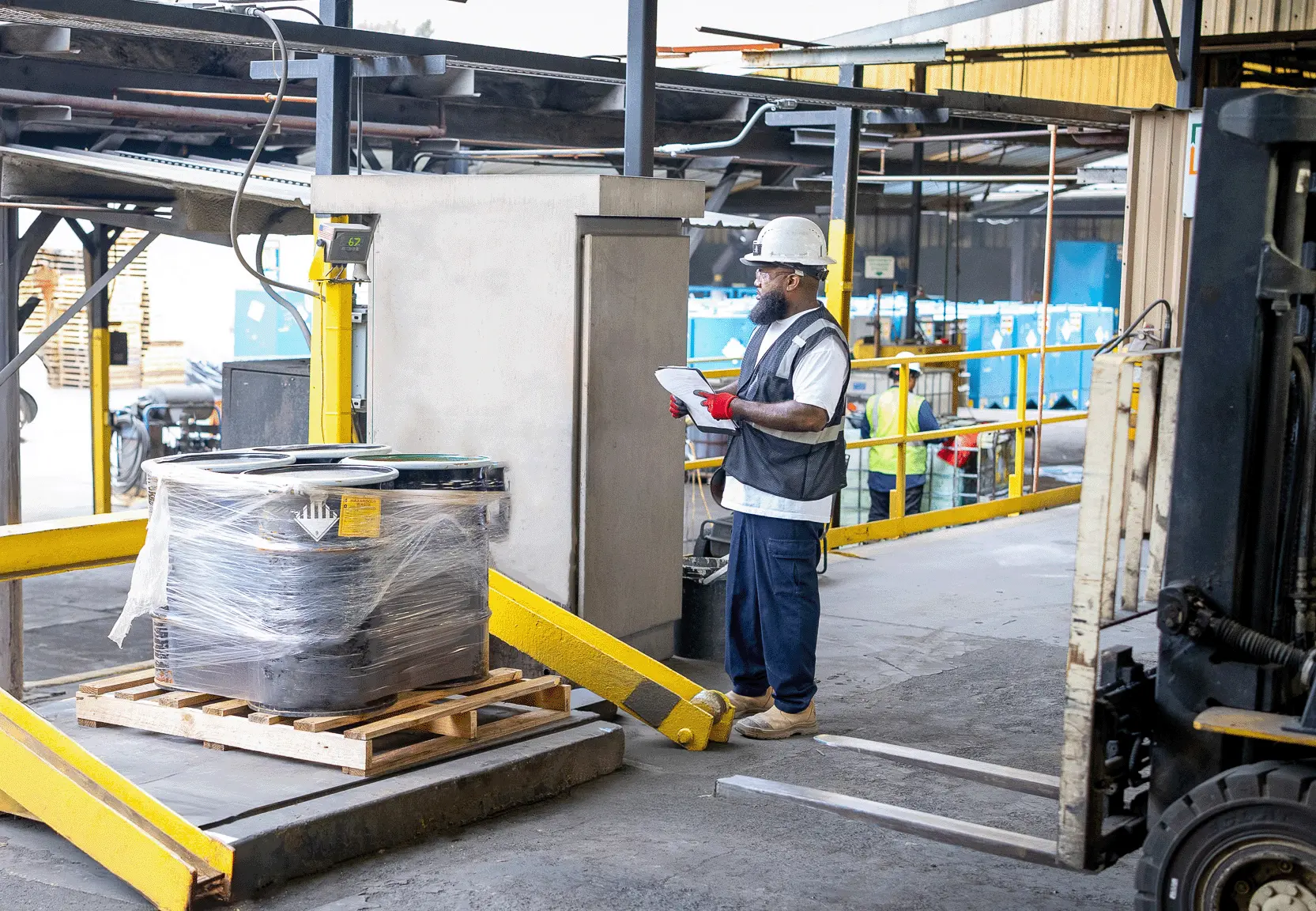
Treatment refers to any process that alters the physical, chemical, or biological character of a hazardous waste to reduce its volume, toxicity, or mobility. [U.S. EPA, 40 CFR Part 264] Methods range from chemical neutralization and stabilization to thermal processes, fuel blending, and centrifuge separation. A properly permitted TSDF applies the treatment pathway that fits the specific waste stream.
Storage is the temporary holding of hazardous waste in containers, tanks, or containment buildings prior to treatment or final disposal. [U.S. EPA, 40 CFR Part 264] At a permitted TSDF, storage can extend up to one year, allowing for consolidation of materials into full, cost-efficient loads before outbound shipment. This is a meaningful operational advantage for generators managing variable or intermittent waste volumes.
Disposal is the final step, where treated waste is deposited into a permitted receiving unit such as a secure hazardous or non-hazardous landfill, an underground injection well, a cement kiln, or a waste-to-energy system. When a TSDF accepts your waste and kills the manifest, it takes legal ownership and ongoing accountability for that material.
Why RCRA Part B Permitting Matters to You as a Generator
Generators retain a duty of care long after their waste leaves the fence line. The manifest system and RCRA’s liability provisions mean that if a receiving facility falls out of compliance, generators can be implicated in the resulting corrective action. [NPS, Hazmat Fact Sheet: Choosing a TSDF] Selecting a TSDF with a current RCRA Part B permit and a clean compliance history is therefore a risk management decision, not just an operational one.
The EPA distinguishes between interim status facilities operating under older grandfathered standards and fully permitted Part B facilities, which have undergone a more rigorous review of their design, operations, financial assurance, and groundwater monitoring capabilities. [U.S. EPA, RCRA TSDF Fact Sheet] Choosing a Part B permitted TSDF is the highest level of compliance assurance available to generators.
How Amlon’s Permitted TSDF Facilities Support Generator Compliance
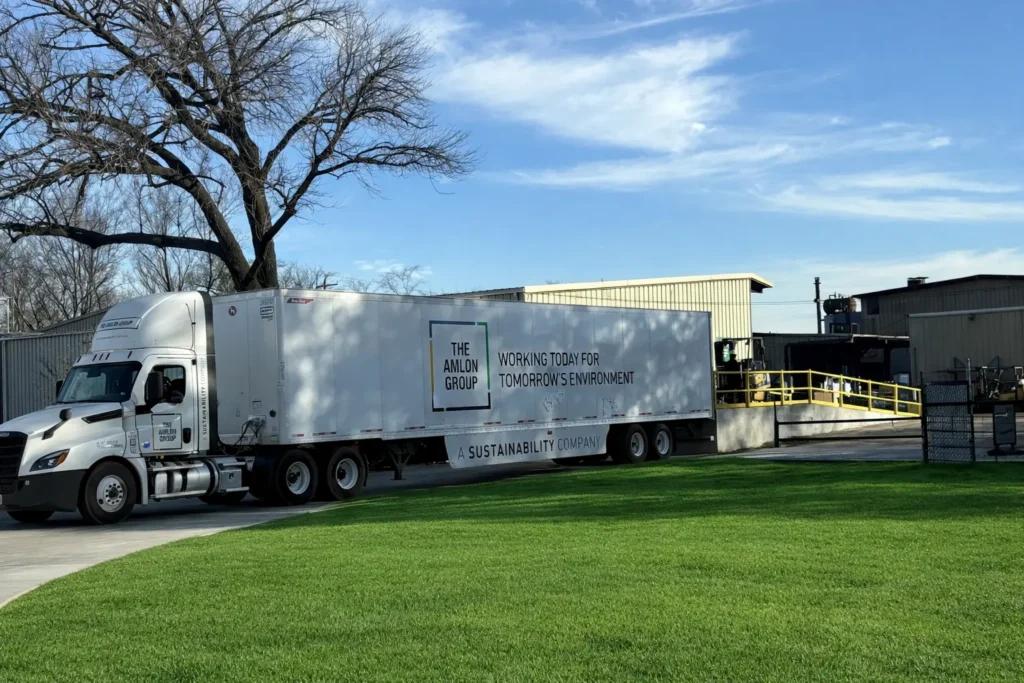
The Amlon Group operates RCRA-permitted TSDF facilities serving generators and brokers across Texas, the broader Gulf Coast, and the Tennessee region. Amlon’s facilities are permitted to accept a wide range of hazardous and non-hazardous waste streams.
Amlon’s approach goes beyond receiving waste. Facilities conduct waste profiling, material analysis, and customized disposal pathway development for each customer’s unique streams. Each facility operates with a dedicated Environmental Compliance professional who tracks compliance obligations through a centralized digital platform, providing generators with the documentation transparency required for their own reporting obligations.
With a 40-plus year operational history and a 2024 TRIR of 0.96 [Amlon Group 2024 Sustainability Report], significantly below the hazardous waste industry average of 2.2 to 3.1, Amlon brings a verifiable safety and compliance record to every generator partnership. For EHS managers, procurement teams, and plant operators evaluating TSDF partners, that record is a quantifiable indicator of operational discipline.
To learn more about Amlon’s TSDF capabilities and request a waste profile review, visit amlongroup.com or call 877-594-5510.
CITATION KEY
[U.S. EPA, RCRA TSDF Fact Sheet] U.S. Environmental Protection Agency, RCRA Treatment, Storage, and Disposal Facilities Fact Sheet, 40 CFR Parts 264 and 265. epa.gov
[NPS, Hazmat Fact Sheet: Choosing a TSDF] National Park Service, Hazardous Materials Management: Fact Sheet on Choosing a Treatment, Storage, and Disposal Facility. npshistory.com